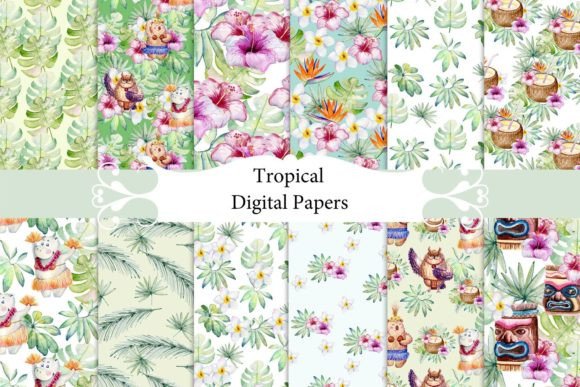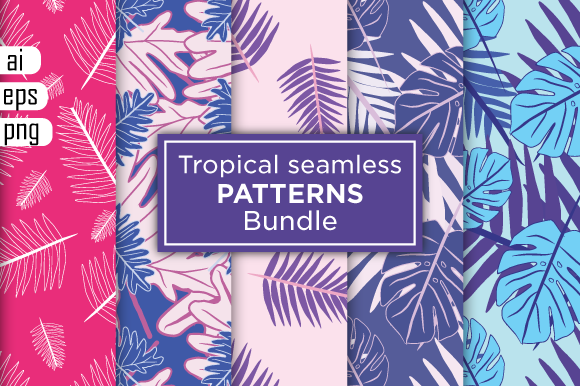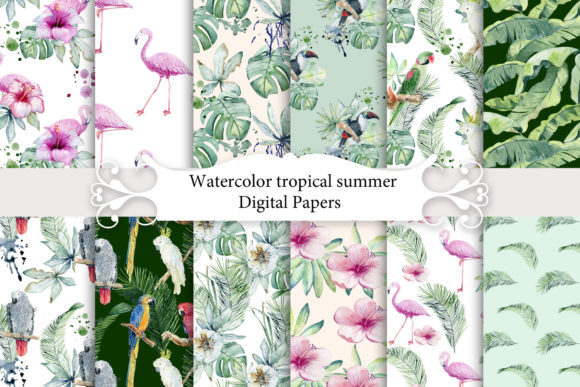
Animal Print Tropical Jungle Patterns
If you’ve ever stared at a blank design canvas and wished for texture, energy, and organic warmth—all in one cohesive visual language—you’ll understand why Animal Print Tropical Jungle Patterns feels like finding the right key for a long-locked door. This isn’t just another digital pattern pack. It’s a hand-painted, thoughtfully curated collection built for makers who value authenticity over automation—designers, crafters, small-business owners, and DIY enthusiasts who want their work to feel alive, intentional, and deeply tactile.
What Makes These Patterns Stand Out?
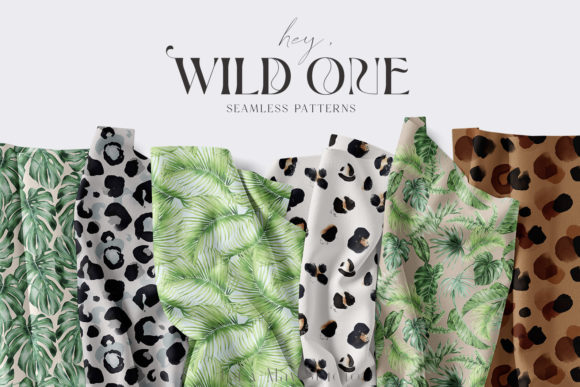
At its core, Animal Print Tropical Jungle Patterns is part of the Hey Wild One collection—a set of six seamless designs that blend three distinct natural motifs: leopard, cheetah, and lush tropical jungle foliage. But what sets it apart isn’t just the subject matter—it’s how it’s made. Every leaf, spot, and shadow was painted by hand using watercolour, then digitally refined without losing that soft, breathing quality only real pigment can deliver.
You get 18 high-resolution seamless patterns (12×12 inches, 3600×3600 px, JPEG) on solid backgrounds—think sandy brown, warm beige, deep black, and layered rainforest greens. These aren’t flat colour fills; they’re tonal fields where the watercolour grain subtly shows through, adding depth and quiet movement. Then there are 6 transparent-repeat tiles (6×6 inches, PNG), ready to layer over any background you choose—perfect when you need flexibility without sacrificing cohesion.
Where These Patterns Actually Shine (Beyond the Obvious)
Yes, animal prints and jungle themes are eye-catching—but their real power lies in how quietly versatile they are across contexts. Here’s where users consistently tell us these patterns become indispensable:
- Textile & Surface Design: Think linen napkins for a boutique café, swimwear fabric for an eco-conscious brand, or ceramic decals for handmade planters. The watercolour softness prevents harsh repetition—so even large-scale repeats on fabric or wallpaper feel grounded, not overwhelming.
- Wedding Stationery: A couple hosting a tropical elopement in Costa Rica might use the beige-based leopard motif for save-the-dates, then switch to the deep black jungle repeat for menu cards—keeping everything unified but emotionally nuanced. The natural palette avoids looking “costumey,” while still evoking adventure and intimacy.
- Scrapbooking & Memory Keeping: Parents documenting a family trip to Singapore’s Gardens by the Bay often pair the rainforest green patterns with handwritten journaling or polaroid borders. Because the motifs are painterly—not clip-art—they age gracefully in albums, never clashing with photos taken years later.
- Digital Product Design: Indie creators building Notion templates, printable planners, or Canva social media kits use the transparent tiles to add subtle texture behind text blocks—enhancing readability without competing for attention. The sandy brown base, for example, works beautifully as a gentle backdrop for light-coloured typography.
- Small-Business Branding: A yoga studio launching a new “Rooted & Wild” retreat series used the cheetah + fern repeat across tote bags, email headers, and Instagram story highlights. Because the pattern is seamless and resolution-rich, it scaled cleanly from tiny app icons to 4×6 ft banners—no pixelation, no reworking.
Real Considerations Before You Dive In
These patterns are designed for ease—but like any thoughtful tool, they reward a little intentionality. Here’s what users find most helpful to know upfront:
First, colours on screen may differ slightly from print. That’s especially true with watercolour-based palettes, where subtle shifts in paper tone or ink absorption change how sandy browns or forest greens land. If you’re ordering physical goods (like fabric or stationery), always request a test swatch first—or plan your layout knowing that final output may lean warmer or cooler than your monitor suggests.
Second, the transparency files are not vector-based. They’re high-res PNGs—ideal for layering, web use, and most print workflows—but not meant for infinite scaling like SVGs. For oversized banners or embroidery digitizing, stick with the 3600×3600 px JPEGs, which hold crisp detail up to ~36×36 inches at 300 dpi.
Third, while the motifs are intentionally cohesive, they’re not monotonous. Leopard and cheetah spots vary in size and density across patterns—some feel airy and scattered, others dense and enveloping. That means you can mix them intentionally: use the open jungle repeat as a subtle background, then overlay a tighter leopard tile as a focal border. It’s designed for layering, not just solo use.
Who Benefits Most—and How?
A graphic designer building a brand identity for a sustainable skincare line might reach for the beige-based leopard pattern to evoke warmth and wild integrity—then use the transparent fern tile to soften product packaging illustrations. Meanwhile, a teacher creating classroom resources could apply the sandy brown version to flashcards or bulletin board borders—adding visual interest without overstimulating young learners.
A wedding planner curating mood boards for clients often saves the deep black jungle pattern for “moody tropical” concepts and the lightest beige repeat for “desert-meets-jungle” aesthetics. And because all files are watermark-free and ready-to-use, there’s zero friction between inspiration and execution—no resizing, recolouring, or licensing back-and-forth.
Even hobbyists appreciate the balance: enough uniqueness to feel special, enough consistency to avoid visual chaos. One scrapbooker told us she uses the same cheetah pattern across four different projects—from baby shower invites to hiking journal covers—because it reads as “her signature texture,” not a trend she’s chasing.
A Final Note on Practicality
This isn’t a “set it and forget it” collection. It’s built for iteration. Want the leopard motif larger? Scale the transparent tile before placing. Prefer a muted olive instead of emerald? Drop a soft colour overlay in Photoshop or Figma—the watercolour base responds beautifully to subtle hue shifts. Need it wider for a fabric repeat? The 12×12 inch JPEGs give ample room to adjust spacing without tiling artifacts.
And if your project falls outside the usual categories? That’s okay too. Artists have printed them onto silk scarves, embedded them into resin coasters, and even laser-etched the motifs onto wooden gift boxes. The strength of Animal Print Tropical Jungle Patterns isn’t just in what it is—but in how easily it becomes part of something else entirely.