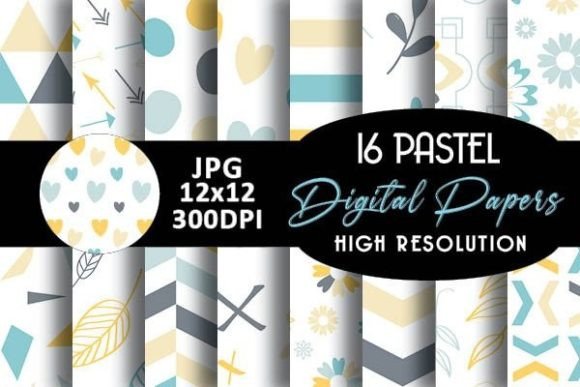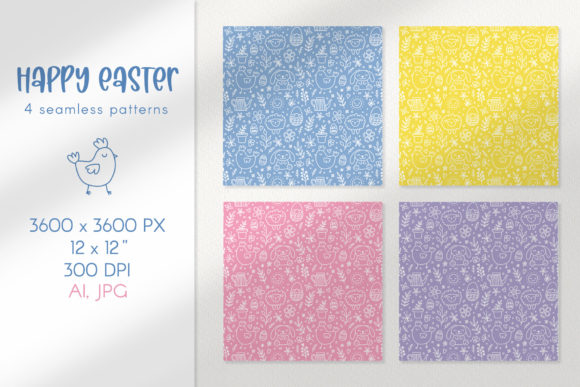
Cute Easter Patterns. Digital Papers
Whether you're designing festive packaging for a small-batch chocolate brand, crafting handmade greeting cards for your Etsy shop, or planning an Easter-themed classroom bulletin board, Cute Easter Patterns. Digital Papers deliver joyful, cohesive visuals—without the guesswork. These aren’t generic clipart bundles or low-res web graphics. They’re professionally crafted, seamless patterns designed specifically for real-world use: printing on kraft paper wraps, cotton tea towels, letterpress stationery, or vibrant flyers—and they work just as well in digital layouts like Canva invitations or social media banners.
Why “Seamless” Matters More Than You Think
A seamless pattern repeats without visible edges or misaligned joins. It’s what lets you tile a design across a full sheet of wrapping paper—or stretch it across a 24-inch-wide fabric bolt—without awkward gaps or duplicated bunnies staring at each other mid-stitch. Many free or budget Easter downloads claim to be “seamless,” but in practice, they’re often just scaled JPEGs with hard borders. That becomes obvious when you try to scale beyond 8.5×11 inches or print at 300 DPI. With Cute Easter Patterns. Digital Papers, every design is built to tile cleanly at any size—thanks to intentional spacing, balanced motif density, and vector-based precision (especially in the EPS files).
A Common Mistake: Assuming All File Types Work the Same Way
It’s easy to overlook how file format affects your project. The ZIP includes both JPG (3600×3600 px, 300 DPI) and EPS (12×12 inches) versions—but they serve different purposes. JPGs are ideal for quick digital use or raster-based printing (like home inkjet wrapping paper), while EPS files retain infinite scalability and crisp edges for professional offset printing, embroidery digitizing, or laser-cut stencils. Using a JPG where you need vector detail—say, for a logo lockup on a foil-stamped gift tag—can result in blurry edges or pixelation. Conversely, forcing an EPS into a basic photo editor that doesn’t support vector layers may cause rendering issues or loss of transparency. Always match the file type to your tool and output method.
Color Consistency Isn’t Automatic—Here’s What to Do Instead
You’ll see bright, juicy colors in the preview images—but those are optimized for screens. Monitors vary widely in brightness, gamma, and color profile. Your printed pastel egg pattern might look warmer on a MacBook Pro than on a calibrated Epson proofing monitor. And if your printer uses unmanaged color settings, the final output could shift noticeably. To avoid surprises:
- Soft-proof in your design app (e.g., Photoshop’s View > Proof Setup > Working CMYK) before sending to print.
- Request a physical proof from your print vendor—especially for packaging or textiles where color accuracy impacts brand trust.
- Use the JPGs for screen-only projects (email headers, social posts), and reserve EPS for anything going to press or production.
Don’t Overlook Scale—Especially for Textiles and Wrapping Paper
A pattern that looks charming at thumbnail size can overwhelm when repeated across a 36-inch table runner—or vanish entirely on a tiny gift tag. The included patterns are sized thoughtfully: the 12×12 EPS files align with standard textile repeat conventions, and the 3600×3600 JPGs give you flexibility for large-format printing (like 24×36 posters or wall decals). But if you’re applying these to fabric, test a small swatch first. Some motifs—like tightly clustered carrots or zigzagging bunny trails—gain clarity at larger scales, while delicate floral eggs read better at smaller repeats. Adjust tiling frequency in your software (Illustrator’s Pattern Options panel or Photoshop’s Define Pattern command) rather than resizing the base file.
What’s *Not* Included—and Why That’s Okay
This is a digital download only. No physical papers, no pre-printed rolls, no mockups. That means no shipping delays, no inventory costs—and full creative control over how and where you apply the designs. But it also means you’re responsible for final output decisions: paper stock weight, ink type (CMYK vs. Pantone), fabric weave compatibility, or bleed settings for packaging. If you expect ready-to-print PDFs with trim marks and die lines, this isn’t the right resource. Instead, it’s a foundational toolkit—designed for creators who want flexibility, not constraints.
Real-World Use Cases That Actually Work
Here’s how thoughtful users get consistent results:
- A small bakery used the carrot-and-egg pattern (JPG) to line custom cupcake boxes—printed on matte 100 lb. cover stock. They adjusted saturation slightly in Photoshop to match their brand’s muted sage green, then added a subtle white border for clean cutting.
- An educator imported the EPS version of the polka-dot chick pattern into Cricut Design Space, resized it to fit a 6×9 inch laminated placemat, and cut vinyl accents to layer over the printed surface—no alignment issues, even after dozens of repeats.
- A freelance stationer combined two patterns—one with bunnies, one with speckled eggs—into a layered background for wedding save-the-dates. Because both were built on the same grid and color palette, they blended seamlessly without clashing or visual noise.
Before You Download: 3 Quick Checks
- Confirm your software supports EPS files—if you’re using Canva, Google Slides, or basic Word, stick to the JPGs. For Illustrator, Affinity Designer, or InDesign, EPS unlocks full editing power.
- Verify your printer’s requirements: Does it need CMYK JPGs? Does it accept EPS? Ask first—don’t assume.
- Preview at actual size: Open one JPG in your image viewer and zoom to 100%. Does the motif feel balanced—not too dense, not too sparse—for your intended use?
These Cute Easter Patterns. Digital Papers won’t fix poor layout choices or compensate for mismatched fonts or weak typography. But when used intentionally—with attention to scale, format, and color management—they become reliable, joyful building blocks. Not just “Easter decor,” but part of your creative infrastructure: versatile, print-ready, and quietly professional beneath the charm.